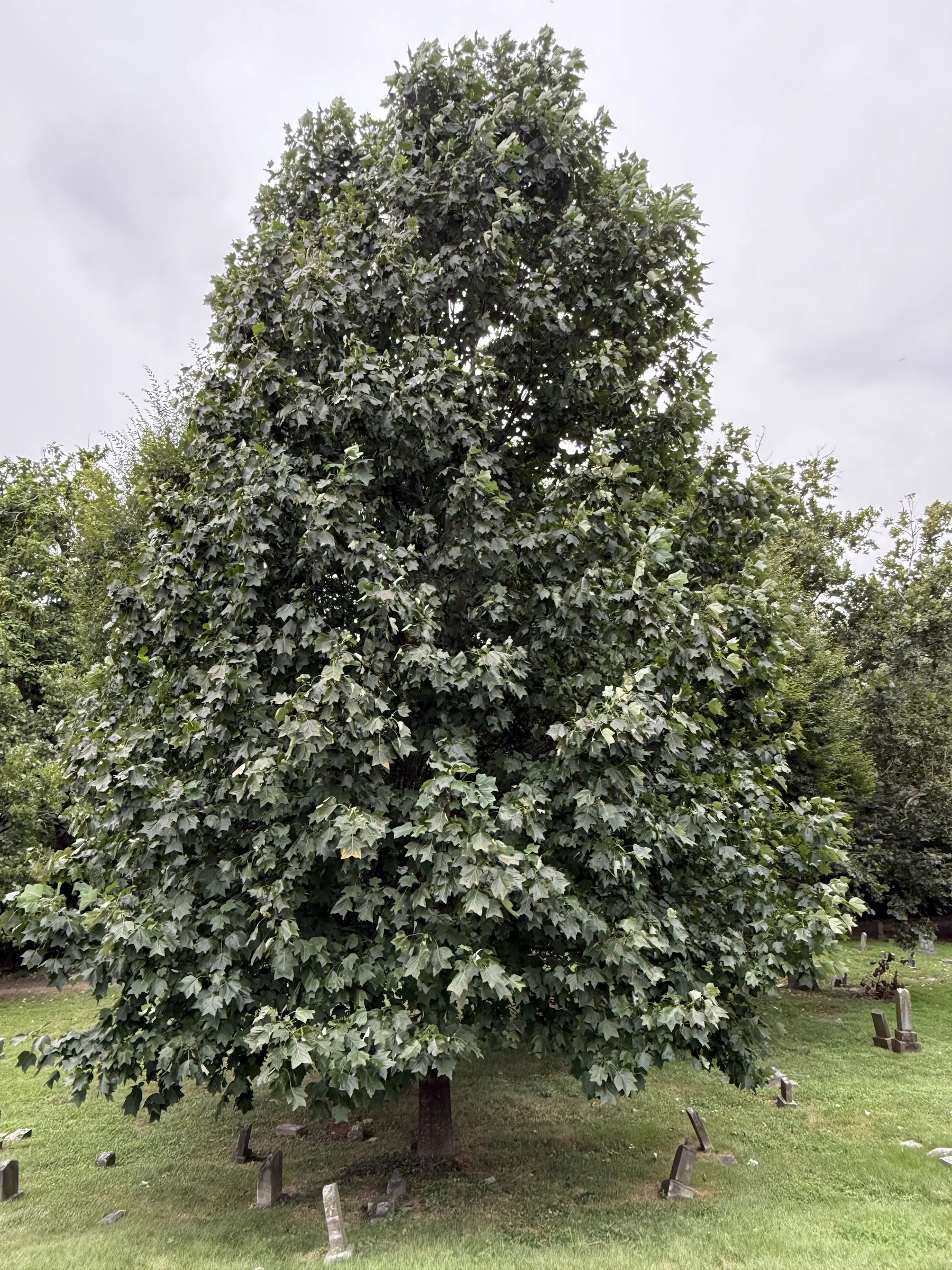
Despite its common name, the tulip poplar is neither related to tulips nor is it a poplar. Instead, it is one of two surviving members of the genus Liriodendron, along with the Chinese tulip poplar, and is more closely related to magnolias. One of the tallest-growing trees in its native range of the North American east, much of its height is made of a branchless trunk as the shade-intolerant tree seeks the sun. As indicated by its myriad of nicknames as well as its scientific name, the tulip poplar is best known for its tulip-like flowers, which bloom yellow and green in a cup formation with a prominent middle pistil and a ring of pollen-laden stamens. It is also known for the traits it shares with true poplars, namely the fluttering quality of its leaves and its capacity to grow. (Although the tulip poplar beats all true poplars in terms of height.)
A truly ancient tree, the tulip poplar dates back to the Cretaceous period. Alongside its flowers that speak to its ancient nature, its leaves are four-lobed and heart-shaped, terminating in a wedge that creates a unique silhouette. It is not a host to many insect species. Unlike other trees, the tulip poplar has only 28 species of moth directly associated with it, but it is the sole host plant for the giant silk moth, one of the largest moth species in North America.
According to a dubiously true story from Walt Whitman, one particular tulip poplar in New Jersey also played host to a dinner party of 9 men in the 1850s. The honey made from the tulip poplar is well known to be distinct with its dark color and strong flavor; perhaps it was featured in the soiree.
ALSO KNOWN AS: Tulip Tree, American Tulip Tree, Tulipwood, Tulip tree, Tulip Poplar, Whitewood, Fiddletree, Lynn Tree, Hickory Poplar, Yellow Poplar
FAMILY: Magnoliaceae
NATIVE STATUS: Native
NATIVE RANGE: Southeastern United States
FOLIAGE: Evergreen
MAX. HEIGHT: 177 ft.
MAX. AGE: 500 yrs.
Stop #18 on the Congressional Tree Walk