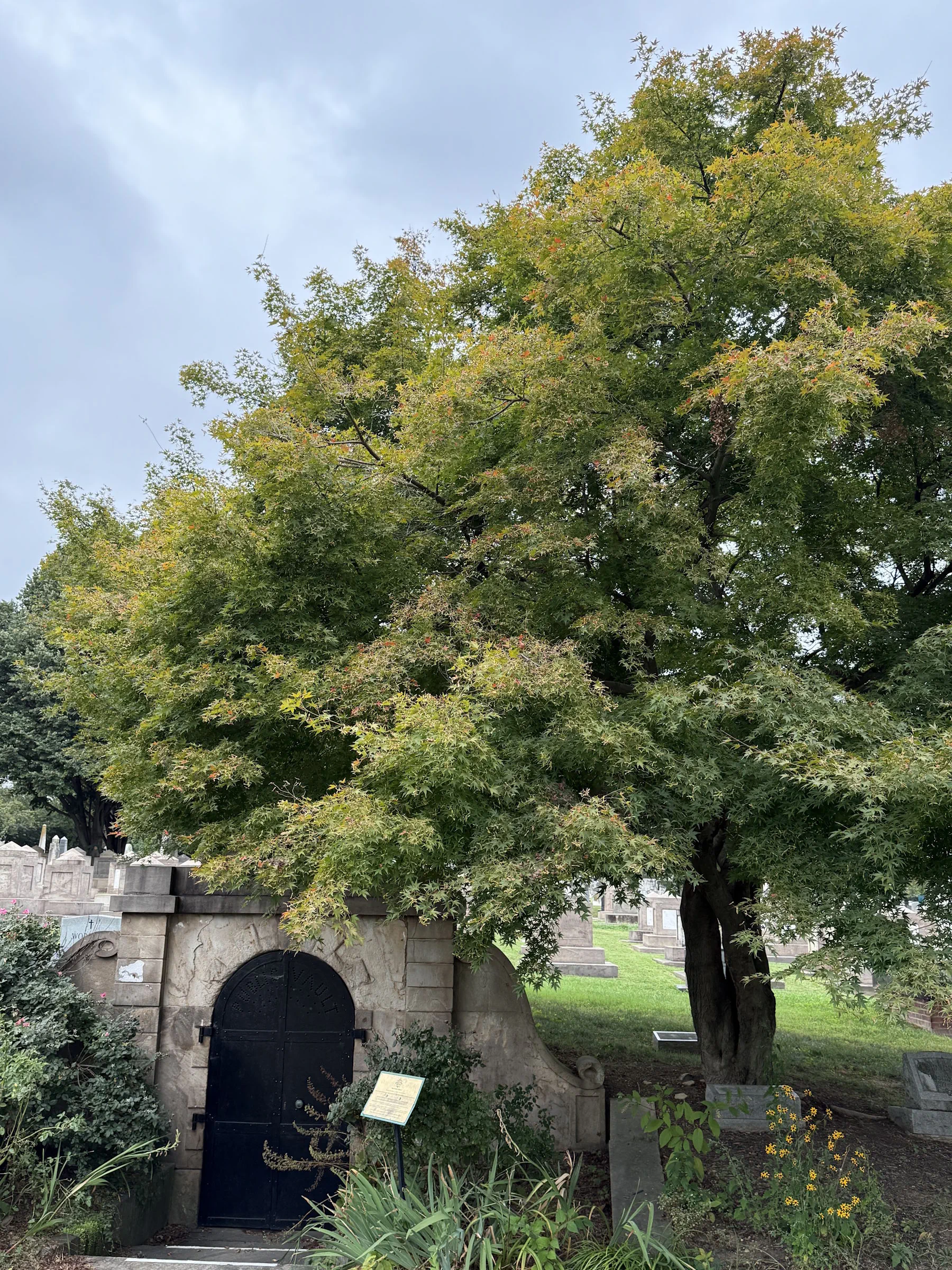
The Japanese maple is a deciduous shrub (or small tree) native to China, Korea, Japan, Mongolia, and southeast Russia. Popular as a decorative tree or for use in bonsai, it has been cultivated in East Asia for hundreds of years, and worldwide since the 1800s. This tree prefers the understory, and its strongest character is its leaves, which have five, seven, or nine lobes arranged in a hand-like fashion. The leaves are the reason for one of the Acer palmatum’s Japanese names: kaede, derived from the old term for “frog hands”.
The Japanese maple has long been used in medicine and cuisine in East Asia. The leaves and branches are used in traditional Chinese medicine, and the leaves are deep-fried in the Osaka prefecture of Japan to make momiji tempura. (Momiji is the other Japanese name for Acer palmatum. The same characters for momiji also make up the word kouyou, meaning the color change of the leaves in autumn.)
FAMILY: Sapindaceae
NATIVE STATUS: Native
NATIVE RANGE: Eastern Asia
FOLIAGE: Deciduous
MAX. HEIGHT: 33 ft.
MAX. AGE: 120+ yrs.
Stop #25 on the Congressional Tree Walk