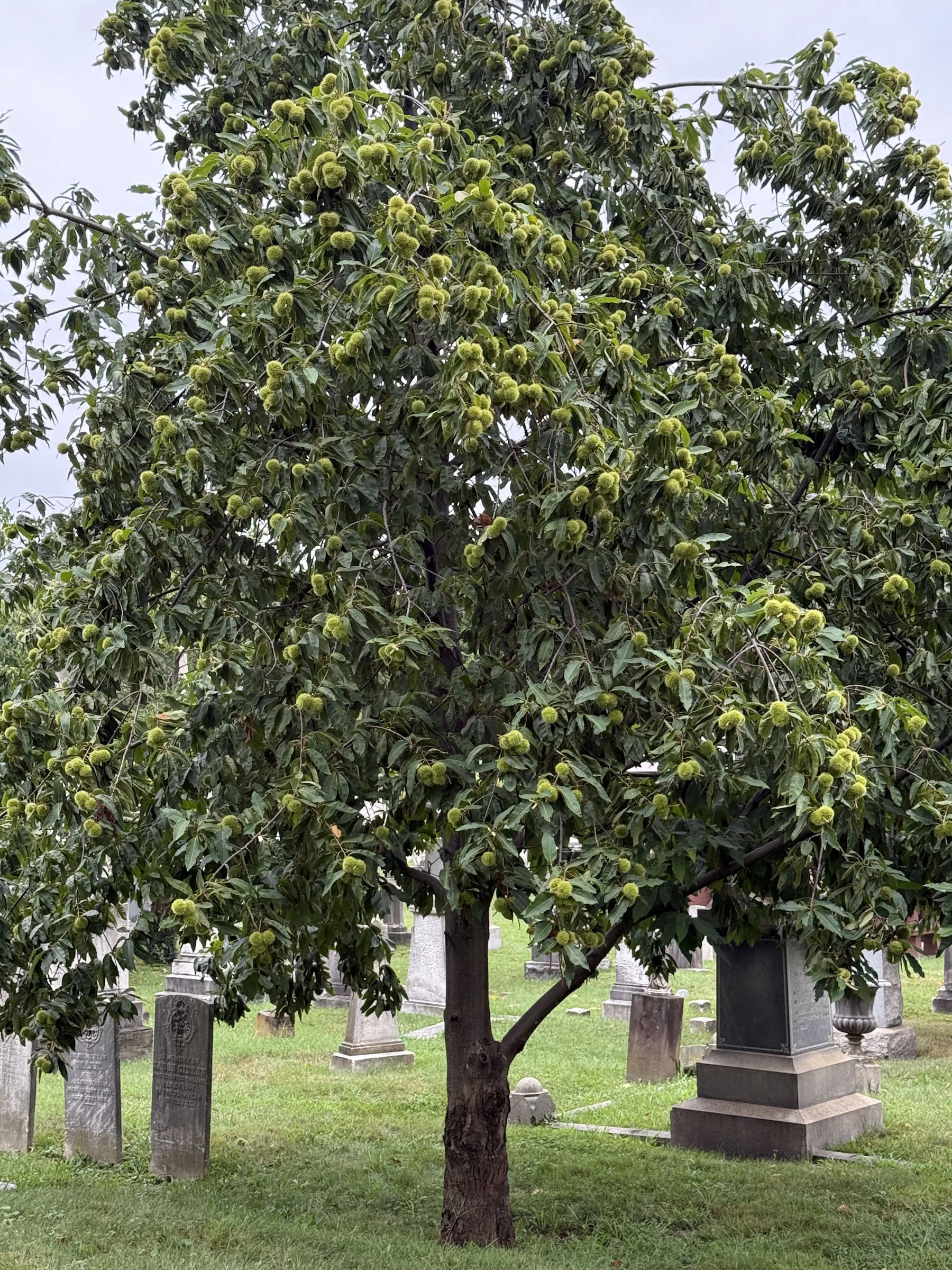
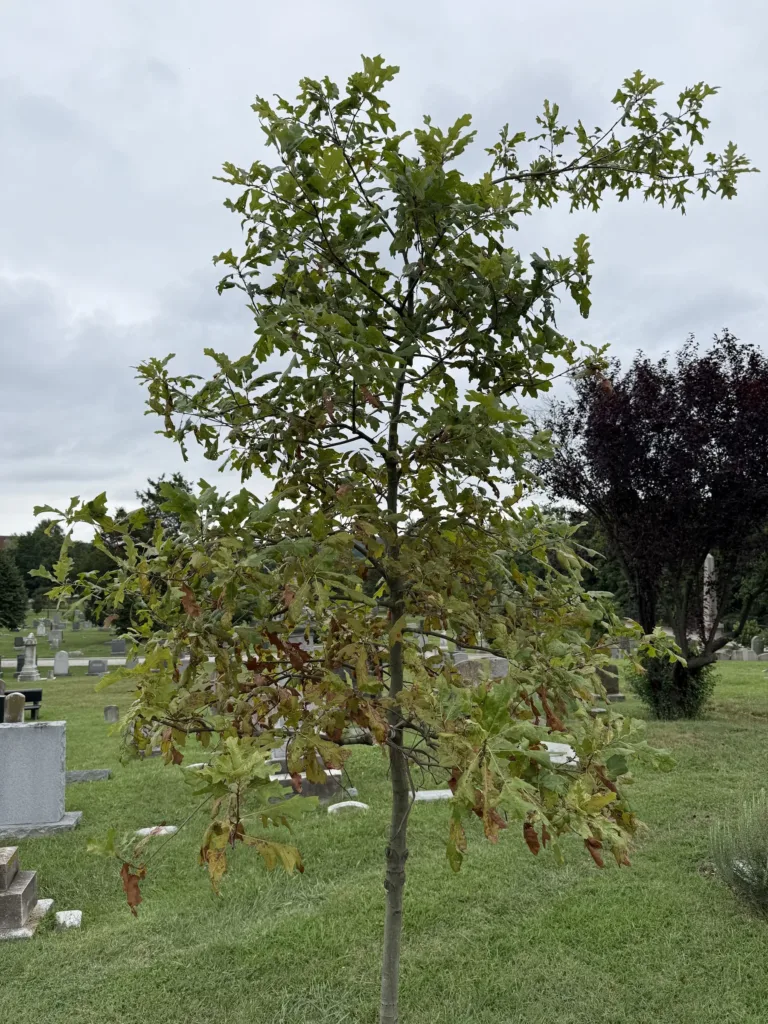
The American chestnut is a critically endangered native species of chestnut tree. Due to the chestnut blight fungus that passed from Japanese chestnut trees in the early 1900s, American chestnuts have a difficult time surviving to adulthood. Although once an abundant and staple cash crop, providing food for humans and animals alike and supplying beautiful, reddish brown wood, the American chestnut population was reduced to 1-10% of its original population (a reduction of around 4 billion trees) and has not recovered. Efforts are being made nationwide to restore the population through crossbreeding and backcross breeding with more fungus-resistant chestnuts, such as Japanese and Chinese chestnuts. HCC’s chestnuts are crossbred with Chinese chestnuts at a ratio of 96-4%.
American chestnuts are fast-growing, deciduous trees. In the autumn, they produce fruit covered in needle-like burrs, which contain shiny brown nuts that are edible and mildly sweet when cooked.
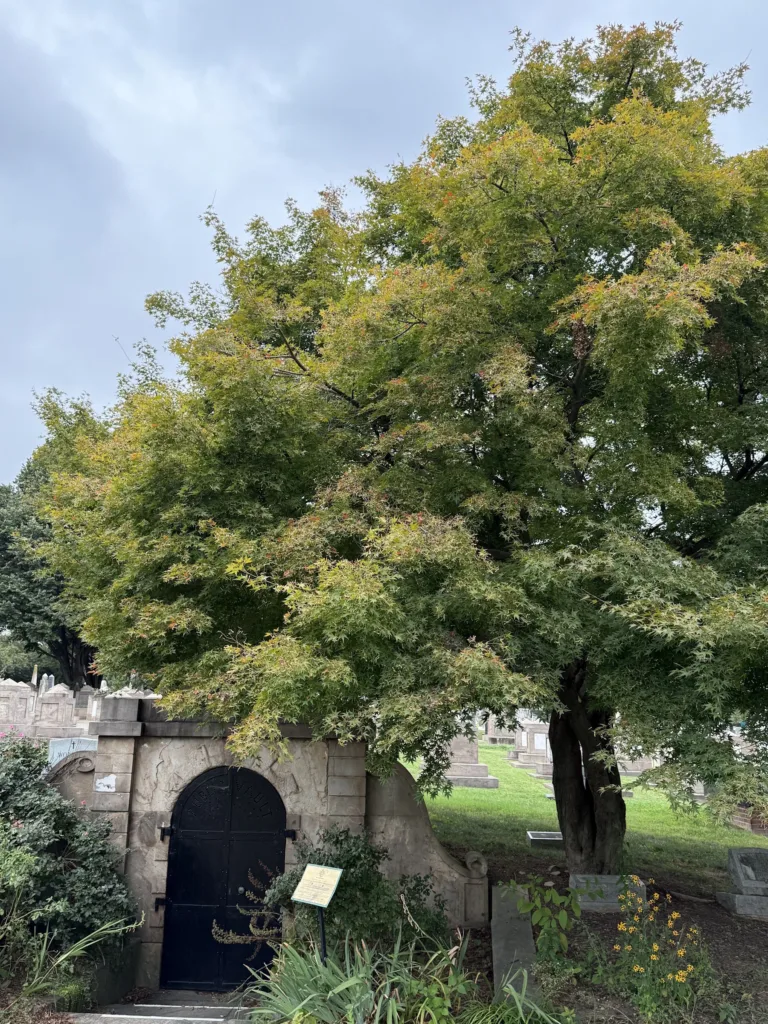
In Congressional Cemetery, there are 6 American chestnuts located in the northeastern section, near the public vault. They were planted by a member of the American Chestnut Foundation’s as a part of the ongoing restoration project to help restore the DC American chestnut population wiped out by the blight.
American-Chinese Hybrid Chestnut
FAMILY: Fagaceae
NATIVE STATUS: Native (but crossbred)
NATIVE RANGE: Eastern United States
FOLIAGE: Deciduous
MAX. HEIGHT: 115 ft.
MAX. AGE: 500 yrs. (before the blight)
Stop #24 on the Congressional Tree Walk