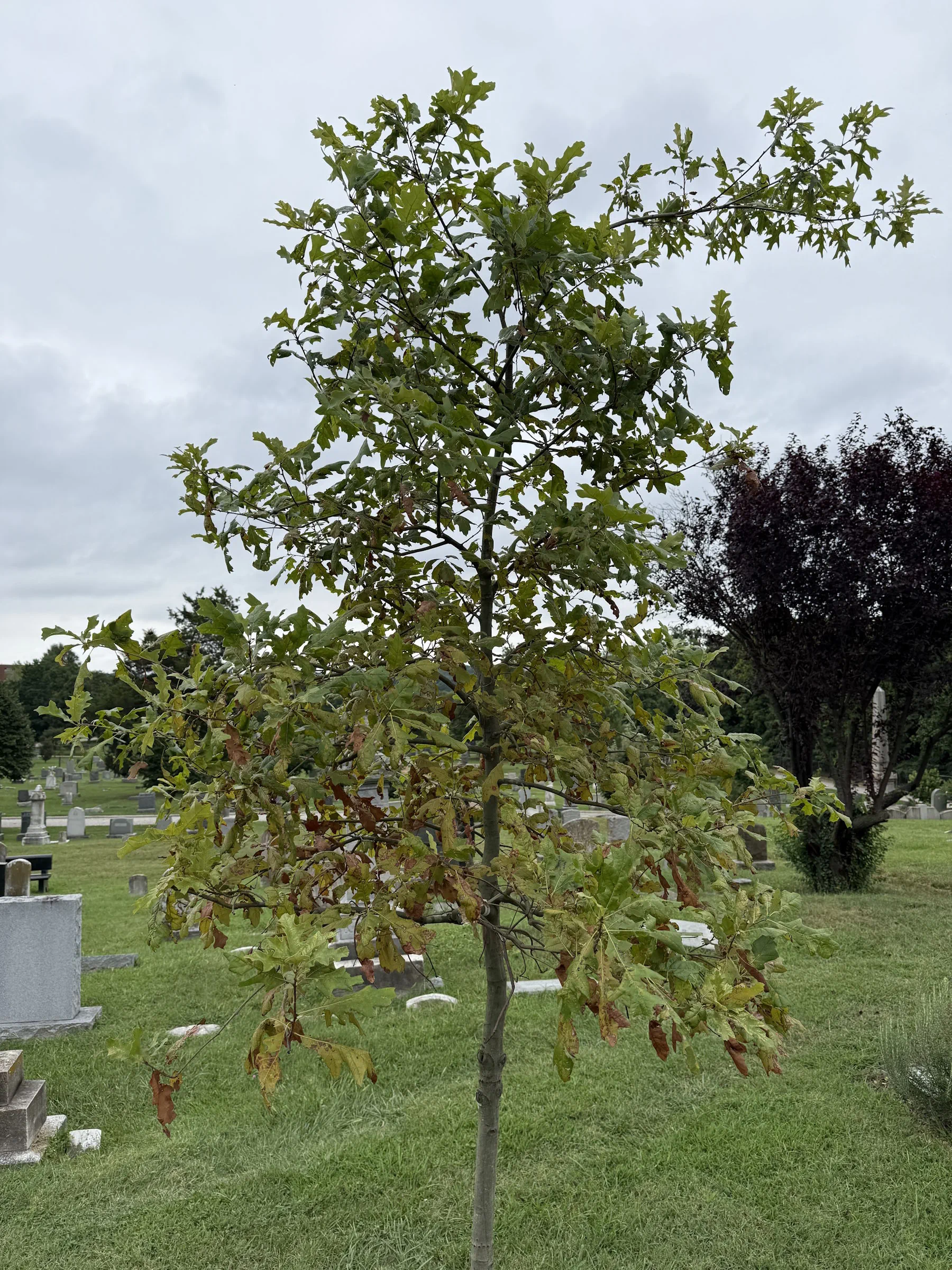
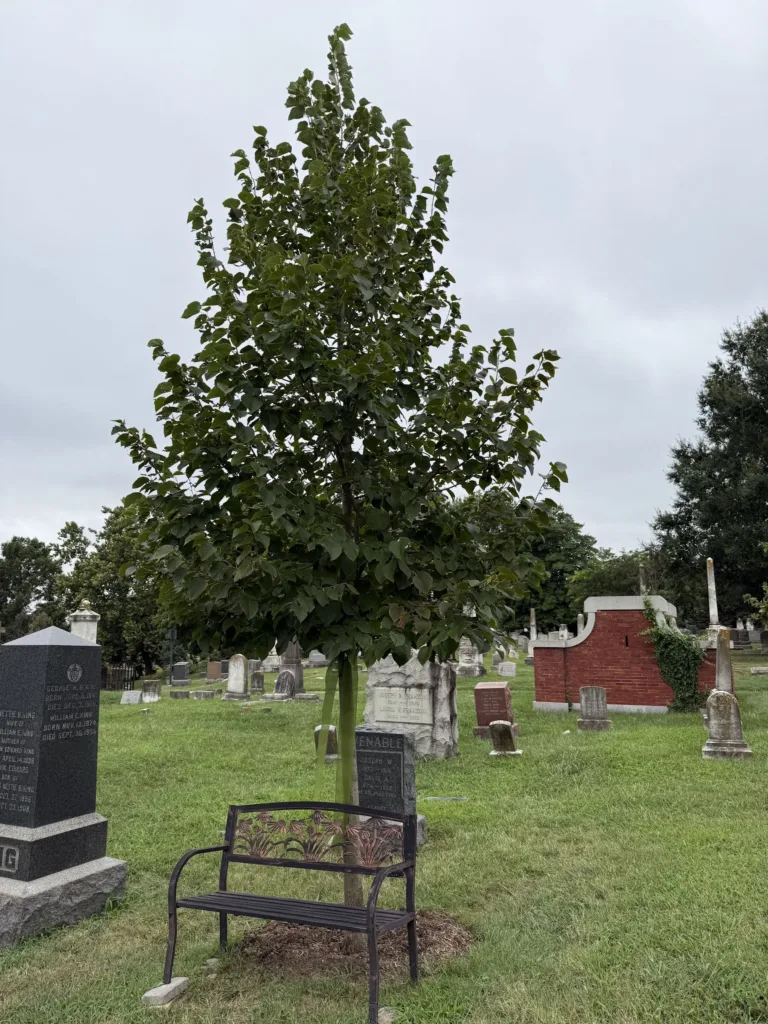
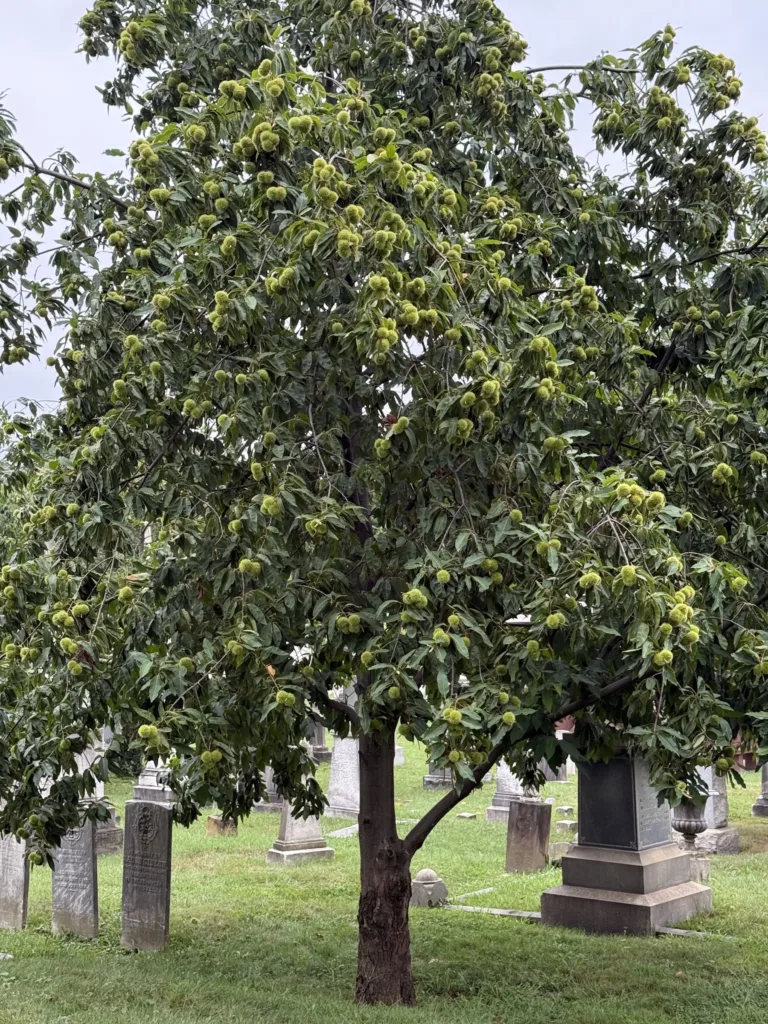
The cherrybark oak is part of the red oak family that reaches a medium-large size. Named for its bark’s resemblance to the black cherry’s with its grey color and deep, scaled ridges, the cherrybark oak is characterized also by another of its namesakes – pagoda – as its leaves are tiered and pagoda-like in shape.
Cherrybark oaks are monoecious, meaning that they bear both parts for reproduction, but they do not self-pollinate. As such, cherrybark oaks all produce acorns, making them a valuable resource for nut-eating animals such as squirrels, deer, birds, and even humans, should the proper processing be done.
The wood of the cherrybark oak is considered the best quality of red oak for woodworking because it is hard, heavy, coarse-grained, and a pleasing shade of light reddish-brown.
FAMILY: Fagaceae
NATIVE STATUS: Native
NATIVE RANGE: Southeastern United States
FOLIAGE: Deciduous
MAX. HEIGHT: 130 ft.
MAX. AGE: 300 yrs.
Stop #23 on the Congressional Tree Walk