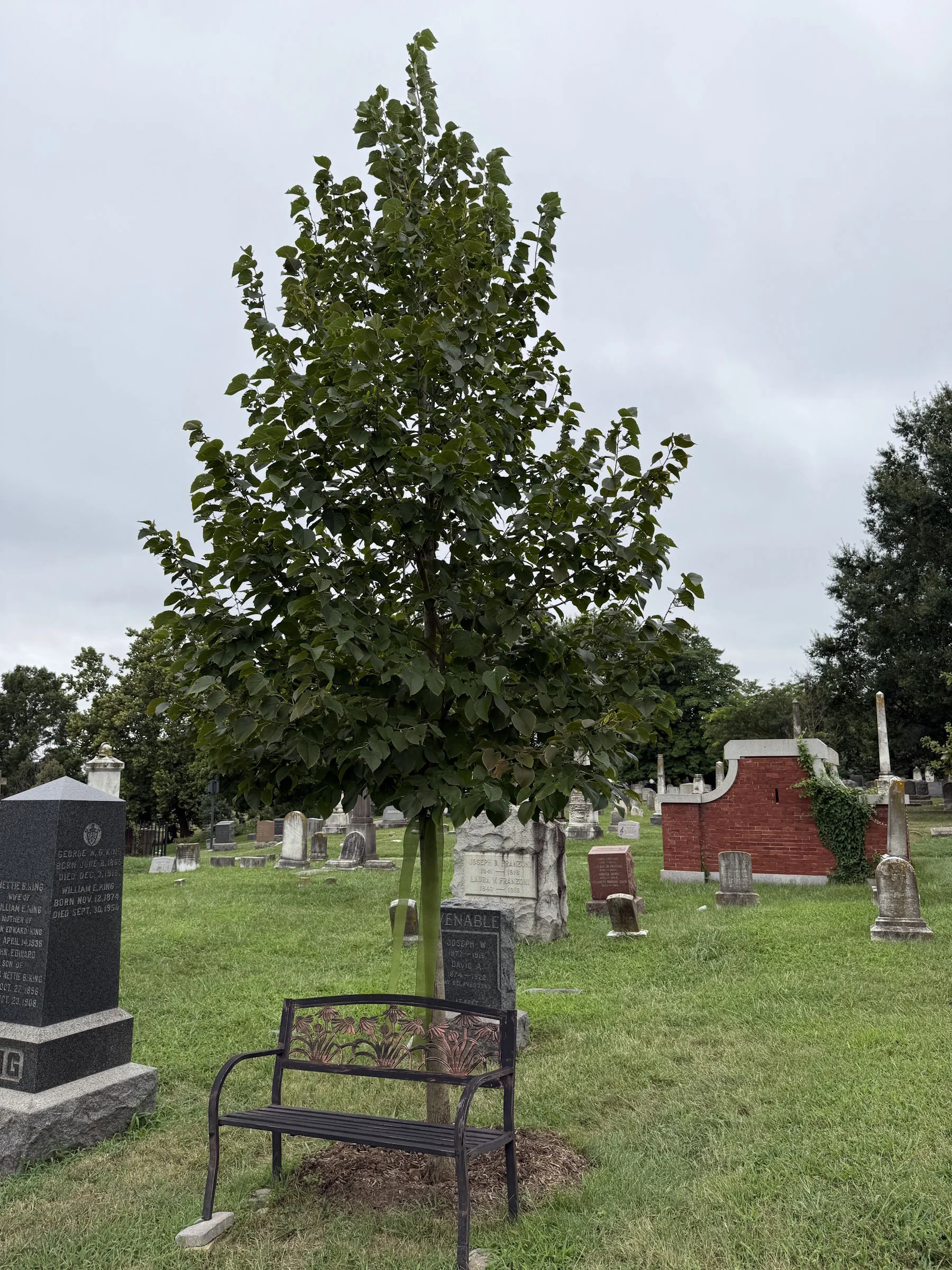
A medium to large-sized deciduous tree native to the northwestern United States and southeastern Canada, the American linden is the only native tree of the genus Tilia in the western hemisphere. It is one of the fastest-growing hardwoods in North America. These trees are self-coppicing (new trees grow out of the roots, trunks, or stumps) and do not rely on their seeds to spread. The American linden grows in a domed shape with heart-shaped, light green leaves with minor toothing and small, fragrant, yellowish-white flowers. Its leaves are an important food source for many species of caterpillar, and the nuts are a favorite among squirrels, mice, and chipmunks. It is the only known host plant of the ribbed cocoon maker species of moth (Bucculatrix improvisa).
Like other linden trees, the American linden has beautiful, easy-to-carve wood that takes stains well. Heavy metal guitars and other instruments favored by the heavy metal genre prefer American linden wood to all others for their creation, as it has a tonality that can smooth out the sounds created by vibrato arms, and it can be painted and varnished for wild designs. The wood was used in 2024 by the University of British Columbia in the development of a super-black material called Nxylon, as the flexible, easy-to-cut nature of American linden lent itself well to a versatile base structure.
Medicinally, the American linden is less potent than other linden species, such as small-leafed linden or silver linden, but its leaves and flowers can still be used to make a lightly floral herbal tea, and extracts can be used as an astringent and an anti-inflammatory. Although inconclusive, there have been studies that show an extract of the American linden’s oils can increase the length of sleep in mice, suggesting a possible sedative property. Honey made of the American linden pollen is said to have a lightly spicy tone to it.
ALSO KNOWN AS: American Basswood
FAMILY: Malvaceae
NATIVE STATUS: Native
NATIVE RANGE: North Eastern United States
FOLIAGE: Deciduous
MAX. HEIGHT: 128 ft.
MAX. AGE: 200 yrs.
Stop #22 on the Congressional Tree Walk