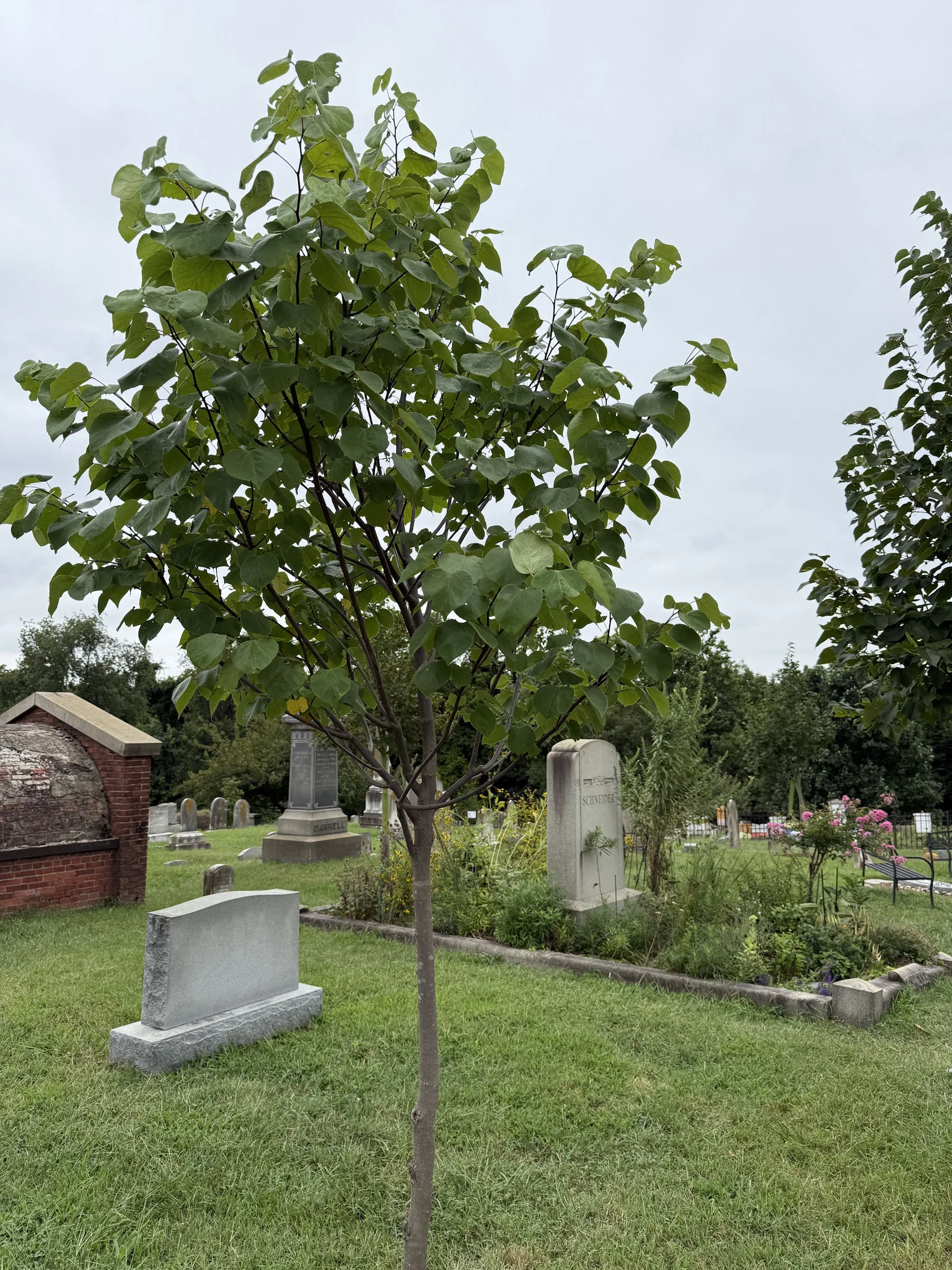
A member of the Ceris genus of plants within the pea family of plants, the eastern redbud is a small-sized deciduous tree with a large native range across most of the eastern United States, and an even further range in which it thrives, reaching west to California and north to Ontario. It is the state tree of Oklahoma, but it is also claimed by the citizens of Columbus, Wisconsin, where they celebrate Redbud Day every year on the Saturday before Mother’s Day.
The eastern redbud is recognizable by its blooms, which are multilobed and pea-flower shaped, ranging in color from light pink to deep magenta, and are cauliflorous, appearing not only near leaves, but on the branches and trunk themselves in bunches. These flowers are edible, with a sweet, mild, pea-like flavor. The young green branches, too, are edible and are used in Appalachian cooking as a seasoning, which is why the eastern redbud is sometimes called the spicewood tree.
This tree is a vital source of food for multiple different lepidopteran (moth and butterfly) caterpillar species, but it is also important for pollinators, as its uniquely shaped flowers can only be accessed by long-tongued bees, such as carpenter bees and blueberry bees.
FAMILY: Fabaceae
NATIVE STATUS: Native
NATIVE RANGE: Eastern United States into Mexico
FOLIAGE: Deciduous
MAX. HEIGHT: 30 ft.
MAX. AGE: 75 yrs.
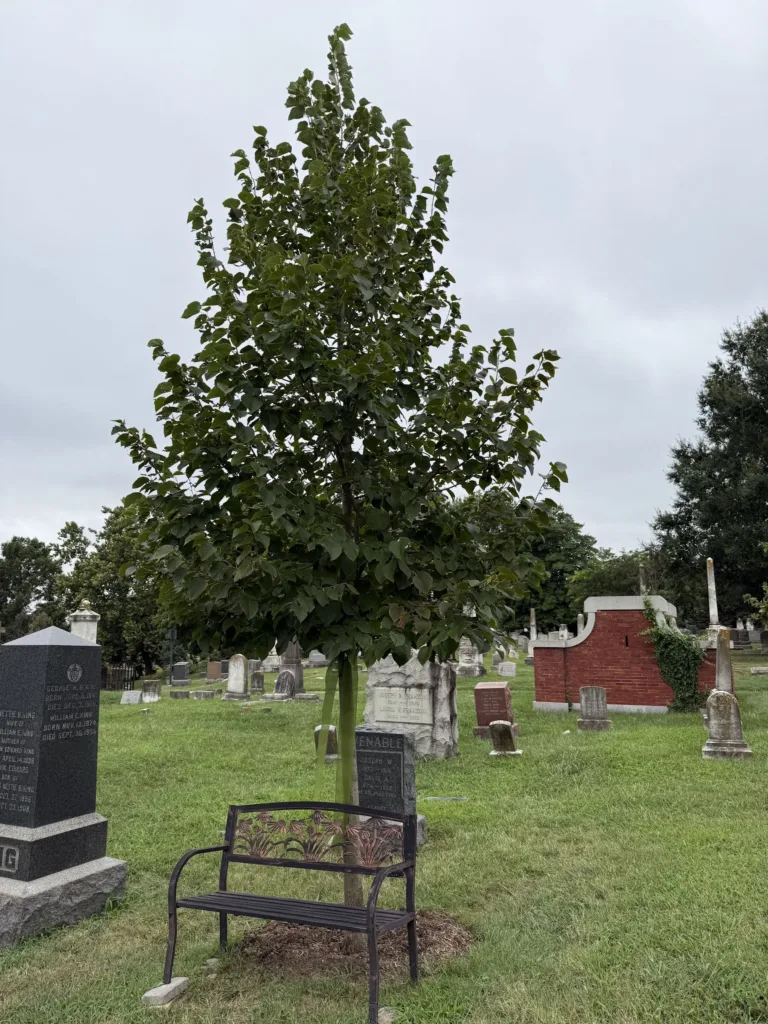
Stop #21 on the Congressional Tree Walk