Known also as the European white linden or silver lime, the silver linden is a tree native to Europe and Asia that has become an important landscaping tree for urban pollinators. Its leaves are serrated with a rounded triangular shape, their surfaces green and smooth on top and white with hairs on the bottom. The silver linden blooms in mid to late summer with small, light yellow flowers that have a strong scent that attracts bees and butterflies. Many species of lepidoptera larvae (butterfly and moth caterpillars) rely on linden leaves as a food source as they mature.
The silver linden is a multi-use tree with important historical uses. Linden blossoms are often used in herbal teas to promote relaxation and are said to help with an array of different ailments, such as inflammation and cough. Honey made from linden flowers is known to be very light colored but with a deep flavor. Linden leaves are edible as well; the young leaves are usable in salads and green smoothies, and more mature leaves are usable in herbal teas.
Linden trees are also well known for their soft, easy-to-work wood without an obvious grain, favored by sculptors and instrument makers. The inner bark of the wood is strong and fibrous, used traditionally by many cultures to make rope and fabric. In China, old-growth linden logs are prized for their ability to grow high-quality dongmo black fungus and shiitake mushrooms effectively.
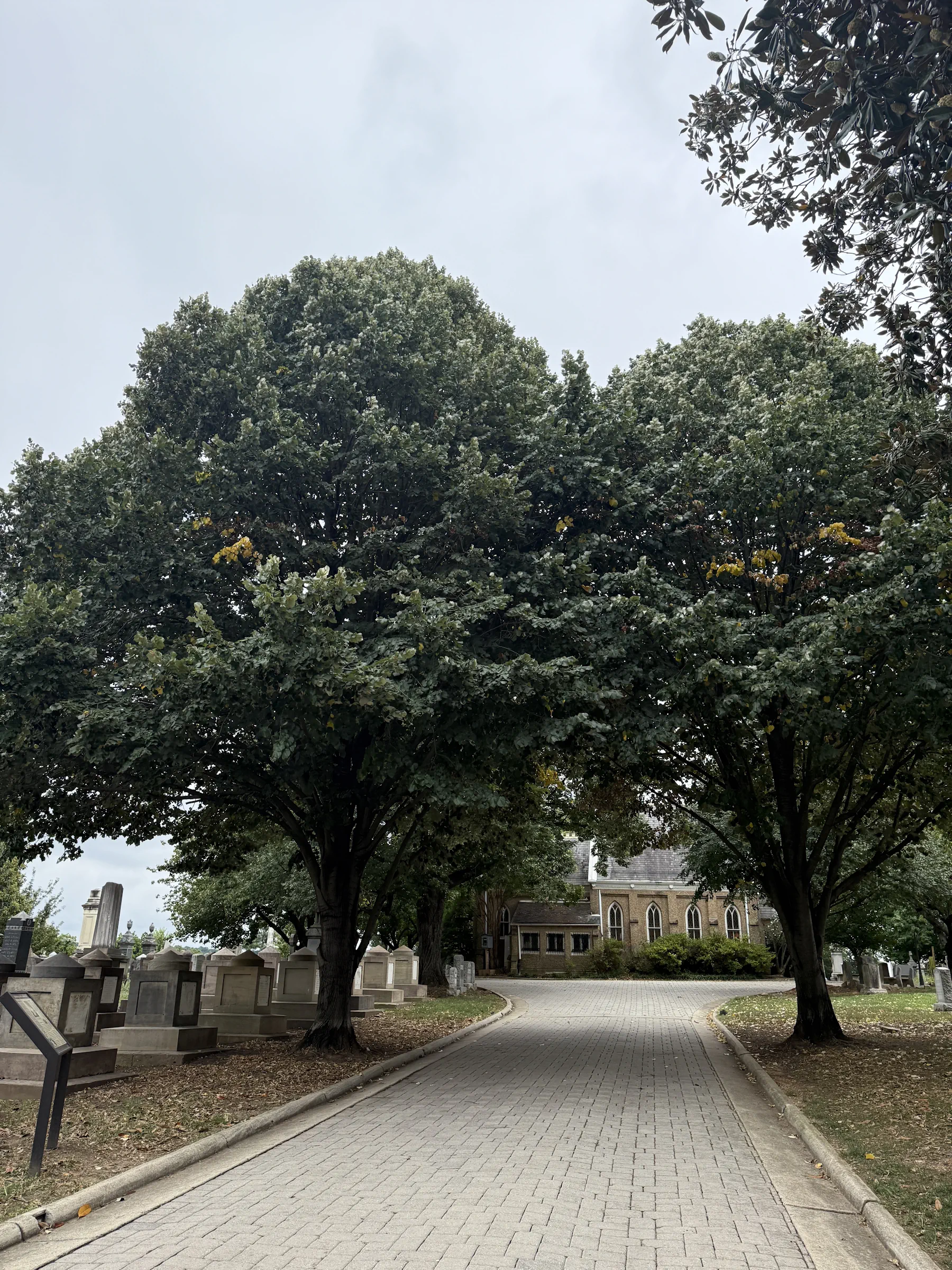
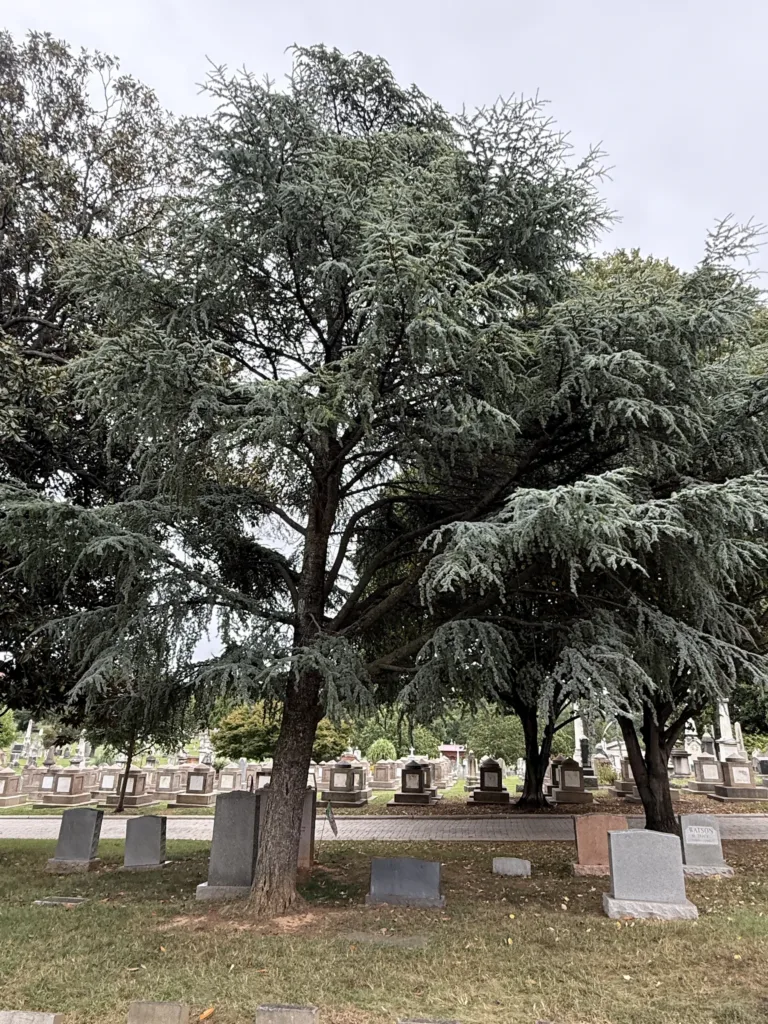
These silver lindens grow next to Congressional Cemetery’s chapel and the Congressional cenotaphs.
FAMILY: Malvaceae
NATIVE STATUS: Non-Native
NATIVE RANGE: Southeastern Europe
FOLIAGE: Deciduous
MAX. HEIGHT: 115 ft.
MAX. AGE: 500 yrs.
Stop #3 on the Congressional Tree Walk