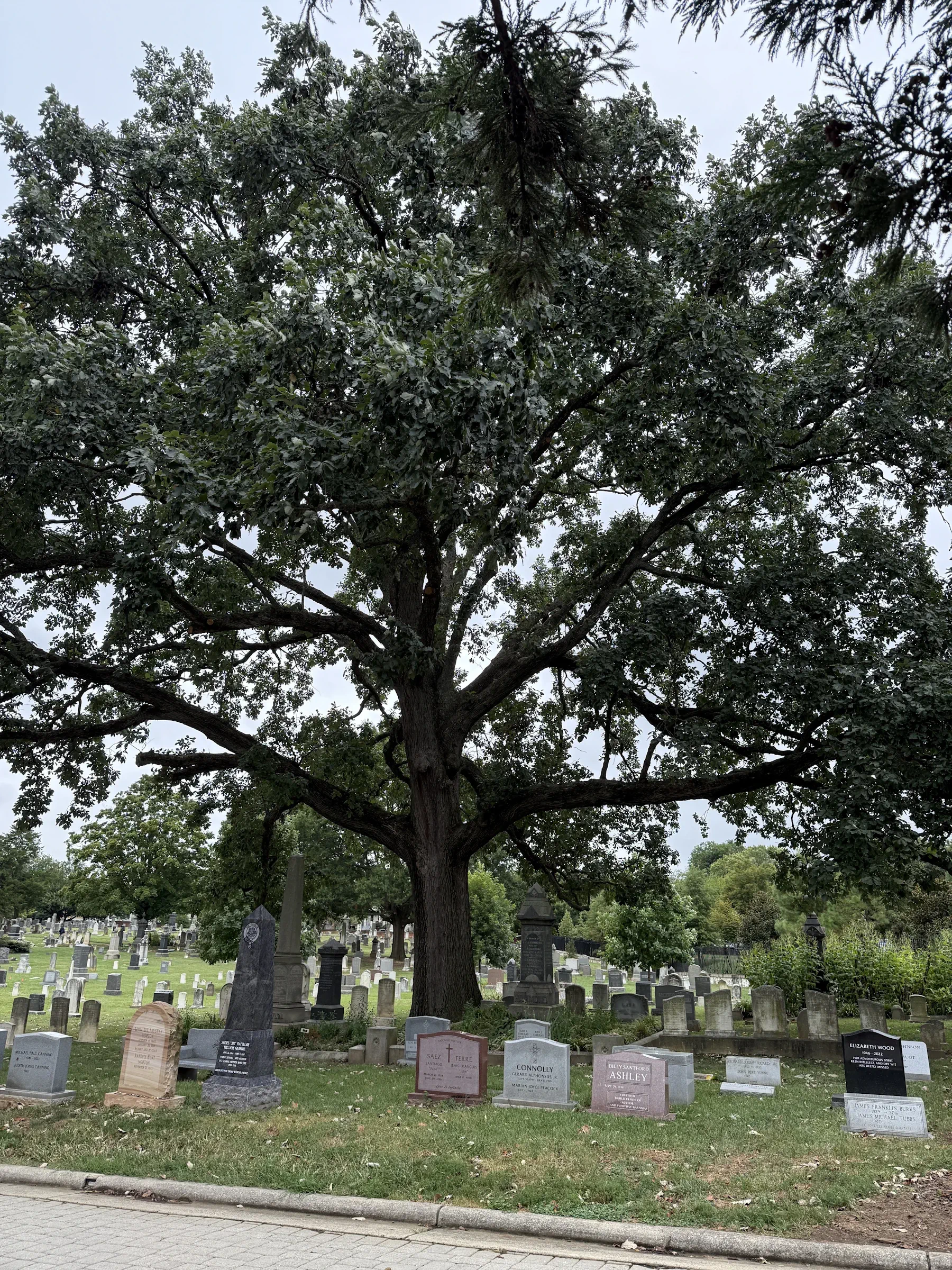
The swamp white oak is a native member of the beech family characterized by deeply furrowed bark, multilobed, egg-shaped leaves that are green on top and powdery grey on bottom, and acorn production. Its acorns are important foodstuffs for multiple species of animals.
The swamp white oak is a popular landscaping tree for its longevity and ease of transplant. It is also an excellent lumber tree, often used to make structures that require strength and durability. As a member of the oak family, it is known to develop oak galls, round structures created by insects to house their young. Historically, these galls were used in combination with iron to make ink, which was widely used from the Middle Ages into the 20th century. Notably, it was used to write the Declaration of Independence. Iron gall ink is slightly corrosive, so any documents written with it need special care taken with conservation and preservation.
HCC’s swamp oak is over 120 years old, having been documented in photographs from 1913 as a young, established tree. This means it would have lived to “see” both World Wars, women’s suffrage, the civil rights movement (albeit 6 miles too far away to hear Martin Luther King Jr.’s “I Have a Dream” speech), among other important historic events.
WITNESS TREE: This tree has lived for over a century and has been a witness to cemetery history.FAMILY: Fagaceae
NATIVE STATUS: Native
NATIVE RANGE: Eastern United States
FOLIAGE: Deciduous
MAX. HEIGHT: 95 ft.
MAX. AGE: 300 yrs.
Stop #1 on the Congressional Tree Walk
 2 - Kousa Dogwood